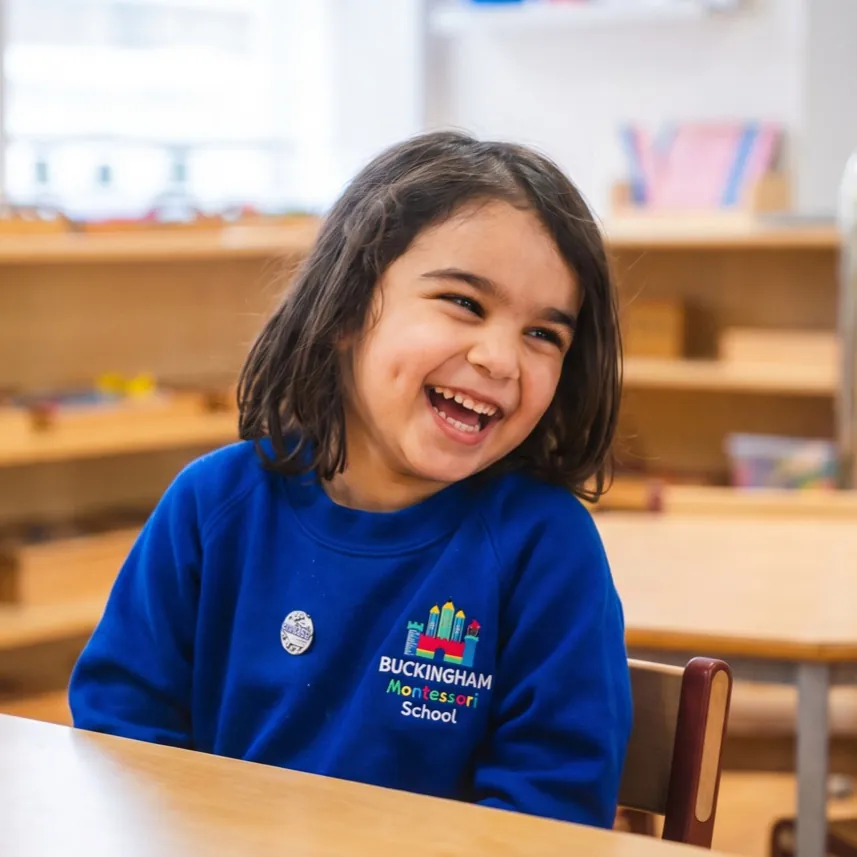
A guide for parents
What is Montessori?
Dr Maria Montessori opened her first school in Rome in 1907. She found that young children learn best when they choose their own work and take as long as they need.
Our teachers still follow her method, alongside the national framework for under-fives.
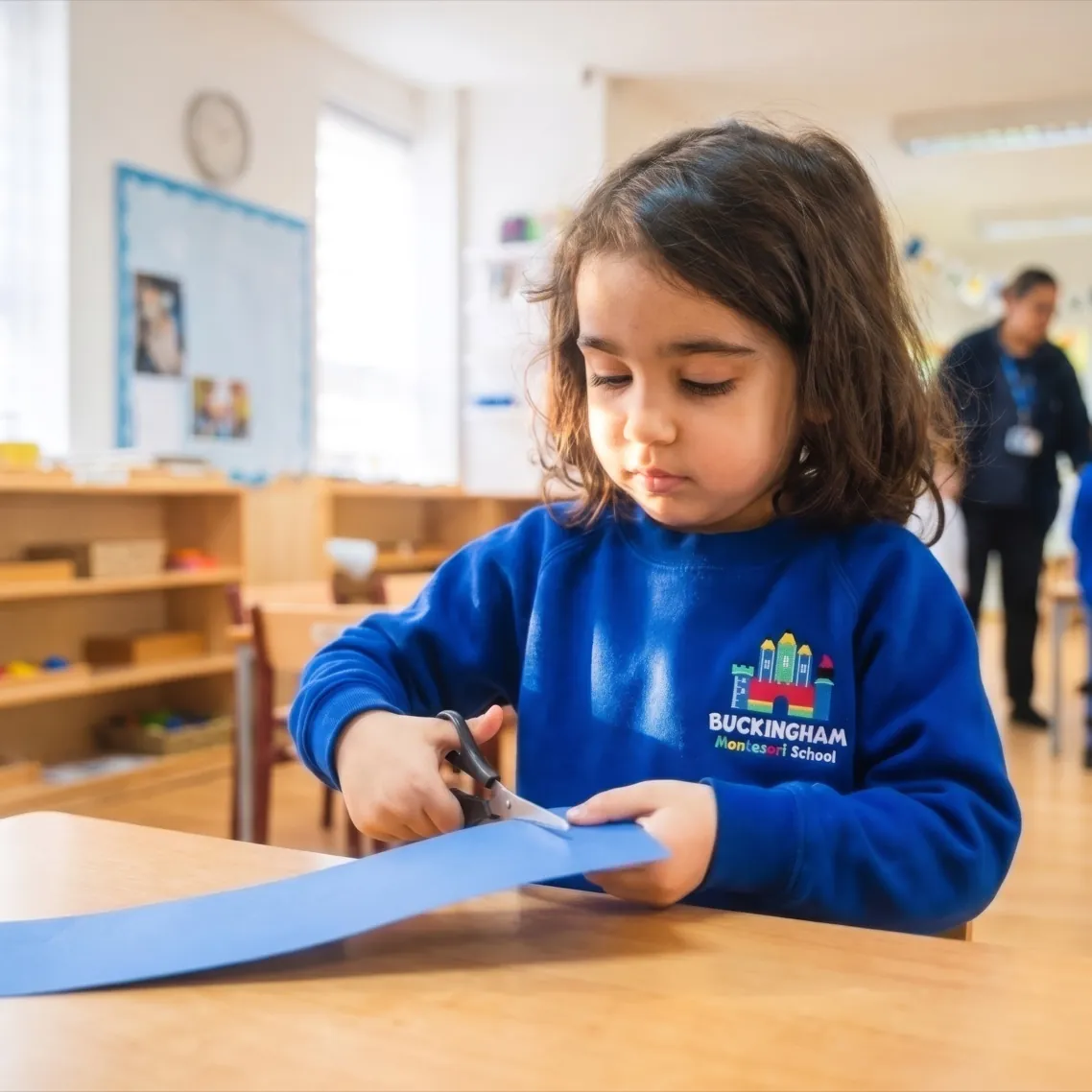
Montessori and the EYFS
How your child learns, and what they learn
Our teachers use Montessori to decide how your child learns, and the Early Years Foundation Stage to decide what they learn. The government sets EYFS milestones in seven areas.
We plan Montessori activities that meet those milestones. A child pouring water practises the physical skills the EYFS asks for, and sorting colour tablets teaches them about the world around them.
In the classroom
How it works
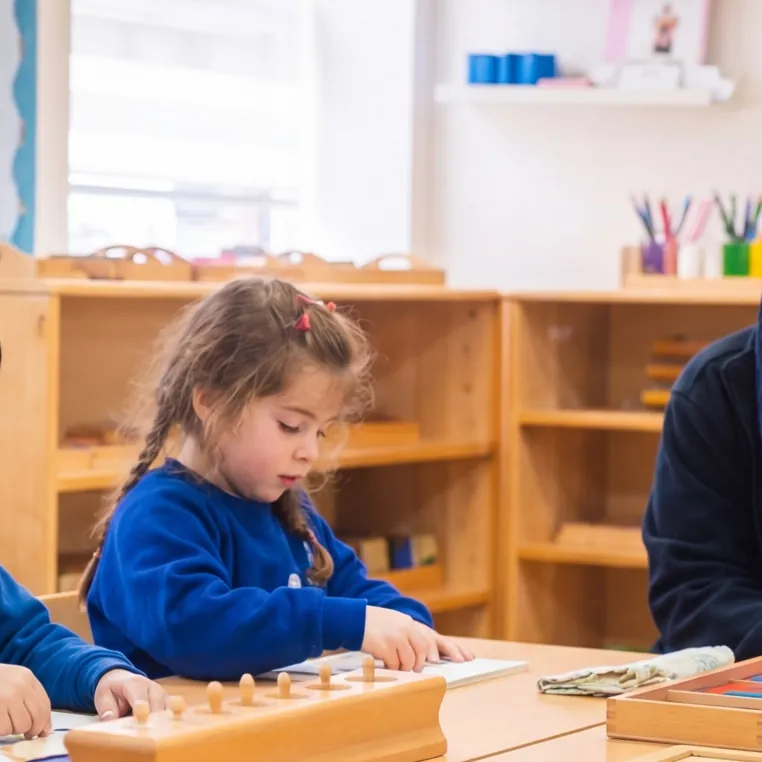
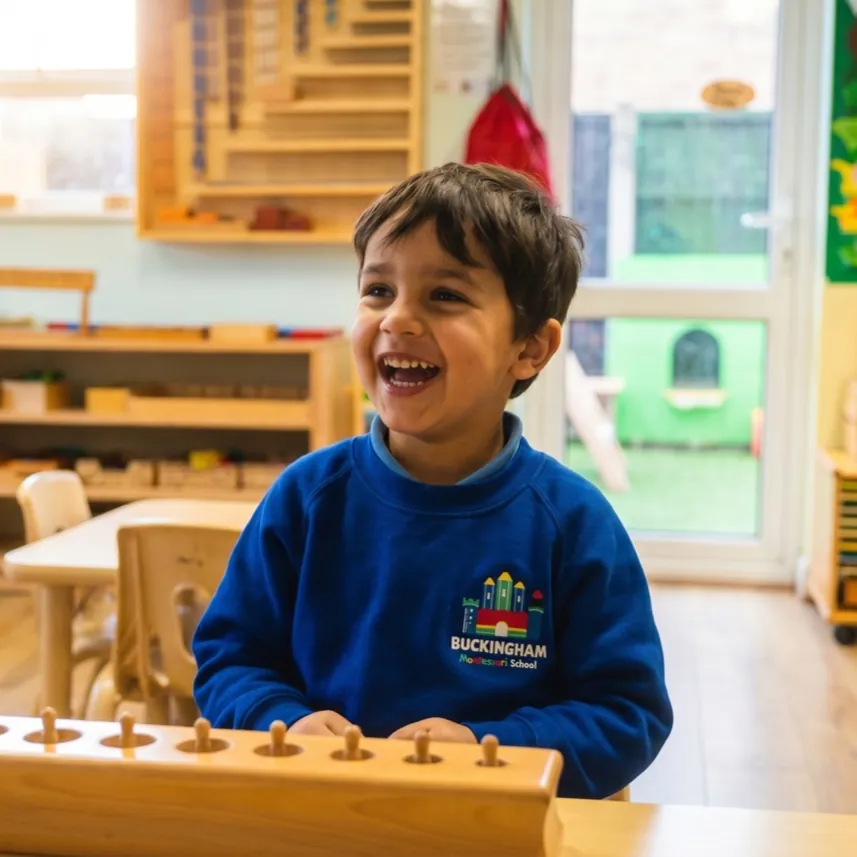
Children pick activities from low shelves while the teacher moves between them, stepping in when a child needs help.
- Child-led
- Your child chooses the activity and decides how long to spend on it.
- Prepared room
- Staff set out each material on purpose, at child height, from simple to hard.
- Hands first
- Children hold numbers and trace letters before they meet them on paper.
- Mixed ages
- Younger children learn by watching older ones, and the older ones learn by helping.
The curriculum
Five areas of Montessori learning
Your child works in all five each week.
Practical life
Children pour, thread, button and sweep. Through these everyday tasks they learn to concentrate and do things for themselves.
Sensorial
With the pink tower and the sound cylinders, your child learns to notice small differences in size and sound.
Language
Children trace sandpaper letters with a finger and build words with the moveable alphabet before they write with a pencil.
Mathematics
Children hold quantities in their hands with number rods and golden beads, long before they write a sum.
Culture
Children explore globes, maps and nature trays, their first taste of geography and science.
From our classroom
Montessori children are out-of-the-box thinkers. They're problem solvers, they're confident, they're creative.
What parents notice
What Montessori builds
Independence
Children make choices and look after themselves from their first year.
Concentration
Your child works for long, uninterrupted periods and learns to focus for longer.
Social skills
In mixed-age rooms, children learn patience and how to lead.
A love of learning
Children who choose their own work tend to want more of it.
School readiness
Your child starts Reception with early reading and the habit of focusing.
Self-regulation
Children learn to wait their turn and respect a friend's work.
At Buckingham
What you'll see on a visit
- The rooms
- You'll see low shelves of wooden materials, all within a child's reach.
- The children
- Children thread beads or pour water, then choose their next task.
- The staff
- Staff watch and guide, and step in when a child needs them.
- The routine
- Children do yoga each day and spend time in the garden.
Come and have a look, just come and see us in action.
Questions
Montessori questions, answered
How is a Montessori room different from a regular nursery?
You'll see children choosing their own activities from low shelves while teachers move between them, helping one child at a time.
What does child-led learning mean?
Your child chooses what to work on and for how long. In Evonne's words: "You set up a purposeful environment where the child is given the skills to explore, and everything they come into contact with encourages and develops their learning."
What's the difference between Montessori and the EYFS?
Maria Montessori designed her method around independence and discovery. The government sets the EYFS, which every nursery in England follows, with milestones in seven areas. We use Montessori to teach towards those milestones.
How does Montessori get children ready for school?
Children leave us able to sit and focus, and to work with others. They also take early reading and number skills into Reception.
How does Montessori build confidence?
Your child does real tasks, like pouring their own water and tidying their own space, and each one shows them they can manage alone. "It instils an independence where children then feel, I can do this by myself," says Evonne.
What age is Montessori for?
Children can start Montessori from birth. We take them from 3 months to 5 years, with materials suited to each age.
Is Montessori right for my child?
Active children can move around the room, and quiet children can settle into work on their own. You'll get the clearest answer by watching the rooms on a visit.
From our blog
Read more about Montessori
What is the Montessori method? A parent's guide
Learn where the method came from and what to look for in a nursery.

Montessori or traditional nursery: which suits your child?
See how the two compare and what to watch for on a visit.
Five benefits of Montessori education
See what researchers found and what our parents notice within months.
The research behind Montessori education
Read twenty years of trials, from Milwaukee to Switzerland, in plain English.
Visits Monday to Friday
Come and see the rooms for yourself
Give us half an hour. You'll meet the manager and walk through the rooms while the children work. Ask us anything about places, fees or funding, and bring your child if you like.